Blog ·
Which Sparx Grinding Ring Should You Choose?
Choose a Sparx Radius, FIRE, or FLAT ring and understand how hollow, player preference, and a controlled trial guide the right selection.
The best first Sparx grinding ring is usually the one that matches a hollow the skater already likes. If the current cut is unknown, ask the previous sharpener before experimenting. A conventional 1/2-inch or 5/8-inch Radius ring can be a useful starting discussion, but neither is automatically right for every player.
Sparx identifies those two Radius sizes as common choices and describes 1/2 inch as a frequent starting point for lighter youth players, with larger radii often worth considering as players get heavier. Treat that as guidance rather than a fixed weight-based prescription. Source: Radius Ring listing.
Choose the ring family first
| Ring | What it is for | Buying implication |
|---|---|---|
| Radius | Conventional radius-of-hollow sharpening | Match an established conventional cut |
| FIRE | A flat-bottom hollow with radius edges | Treat it as a different hollow design |
| FLAT | Preparation and damage-removal work | It is not a substitute for the finished skating hollow |
Sparx explains the Radius and FIRE designs and the FLAT ring’s preparation role. A 1/2-inch FIRE ring and a 1/2-inch Radius ring should not be assumed to produce identical geometry simply because their labels share a fraction.
Understand the conventional hollow scale
For a conventional radius hollow, a smaller radius makes a deeper groove and generally increases bite; a larger radius makes a shallower groove and generally favors glide. A 1/2-inch hollow is therefore deeper than a 5/8-inch hollow. See Sparx’s radius-of-hollow explanation.
That relationship is a starting principle, not a complete prediction of skating performance. Player preference, technique, blade width, and ice conditions belong in the assessment. A teammate’s preferred ring can suggest a trial, but it is not a personalized recommendation.
Change the hollow in a controlled way
Begin with a known good sharpening and record the ring type and size. If you want to experiment, change one variable at a time and use practice sessions for the comparison. Keep the same steel where possible.
Ask specific questions afterward: Were controlled stops harder? Did the edges feel overly engaged? Was the player comfortable holding an edge in familiar turns? More precise feedback is more useful than “sharper” or “faster.”
If the blade is uneven or poorly finished, fix that problem before deciding whether the hollow is unsuitable. A ring change cannot diagnose every complaint about skating feel.
Buy for the actual users
For one player with an established cut, start with that ring. For a family, list everyone’s existing preferences and group identical cuts. A bundle of different rings can be useful for planned experimentation, but buying every available size is unnecessary.
Goalies and figure skaters should use guidance appropriate to their blades and skating needs. Do not apply a youth hockey starting point to every blade the household owns. Confirm figure-blade compatibility and its adapter requirements separately.
Allow for hollow changes and ring life
Changing the hollow can require more sharpening work than refreshing the existing cut. Follow the machine’s prescribed procedure, finish the blade, and inspect it. Track actual ring use instead of relying on an advertised maximum number of sharpenings.
Read how to use Sparx for the operating sequence, the new-steel guide for establishing a cut, and the cross-grinding article before using a FLAT ring. If you are still unsure, take the blade and your skating feedback to a knowledgeable technician and ask for a conservative first trial.
— You might like
Featured products from this guide
-
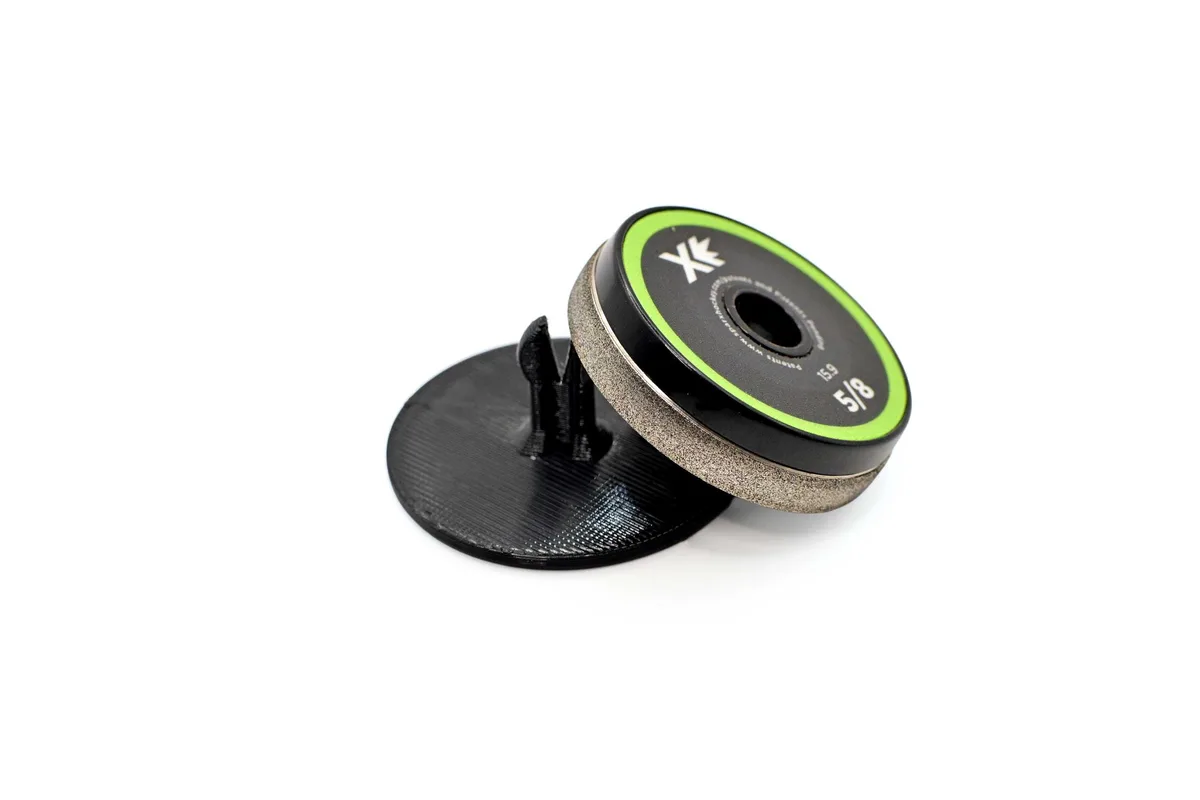 Accessories
SPARX Hockey Grinding Ring Islands in Matte Black: Precision Skate Sharpener Organization for Players
5.0(3)$24.99 -
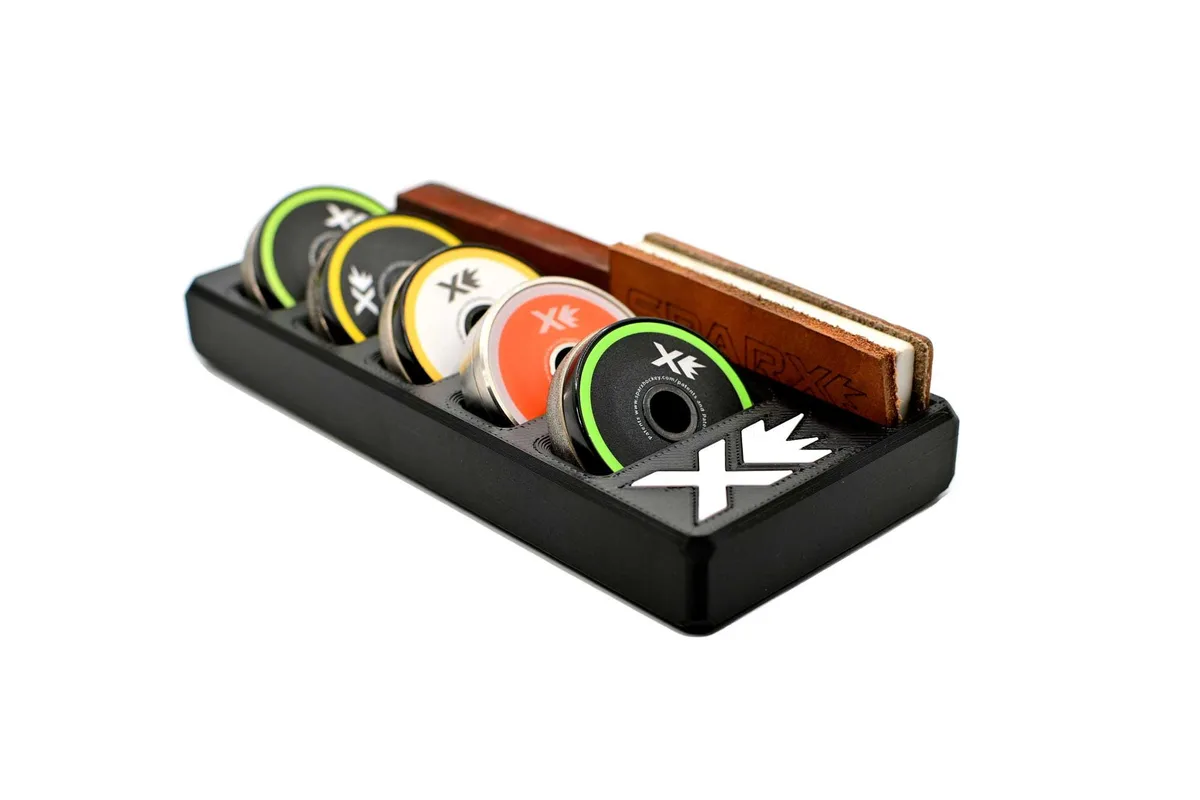 Accessories
Sparx Grinding Ring Organizer and Compact Skate Sharpener Accessory
4.9(11)$39.99 -
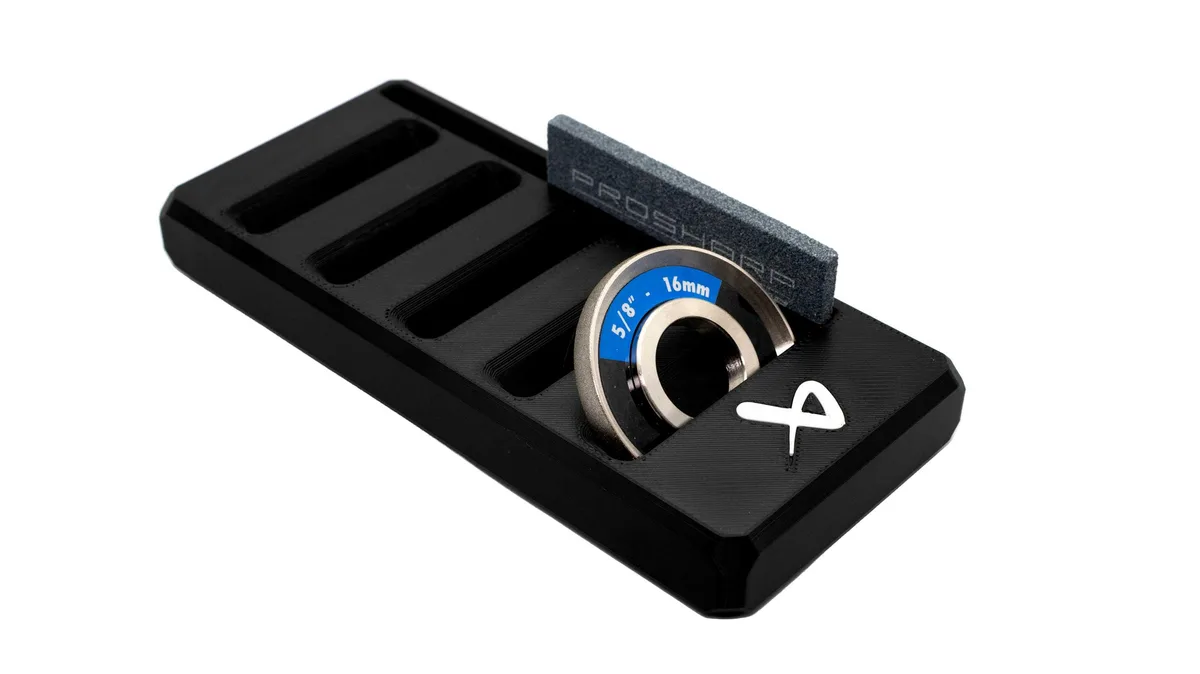 Accessories
Bauer Prosharp Grinding Wheel Organizer and Compact Skate Sharpener Accessory
5.0(2)$39.99