Blog ·
Can Sparx Sharpen New Skates and New Steel?
Learn how Sparx handles new skate steel, why the first sharpening takes more work, and how to separate hollow creation from profiling.
Yes, Sparx can sharpen compatible new hockey skates and replacement steel. The first sharpening may need more cycles than a routine touch-up because the chosen hollow must be established across the intended skating surface. New steel should be inspected and prepared before its first use on the ice.
For the ES300, Sparx recommends ten cycles for brand-new steel or a change of hollow. Treat that as the manufacturer’s starting procedure, then verify the finished blade. Source: ES300 manual.
First decide what “new” means
A new skate may have untouched factory steel, steel sharpened by the retailer, or runners that were also profiled before delivery. Ask what work has already been done. Starting from that information avoids an unnecessary hollow change or repeated sharpening of a blade that was already prepared.
Record the blade model and intended hollow. If the skater previously liked a particular setup, use it as the comparison point. New boots, new steel, and a new cut already introduce several variables; changing all of them without a record makes feedback harder to interpret.
Check fit before starting
Confirm that the blade is compatible and correctly seated. If you are working with loose replacement runners rather than complete skates, use a holder specifically intended and confirmed for that task. Do not improvise clamping on a narrow or unusual blade.
Verify alignment and the ring contact position as required for the machine. A remembered setting from a heavily worn blade is not sufficient evidence that a new runner is positioned correctly.
Inspect the result instead of relying on the timer
After the initial sharpening sequence, complete the appropriate deburring process and check the edges. Look for a consistent finish over the intended skating area. An edge measurement and visual inspection answer different questions: the first checks relative height; the second helps reveal remaining damage or an incomplete finish.
Sparx explains these quality considerations in its sharpening basics and edge testing guide. If the result is still questionable, find the cause before repeatedly adding cycles.
Does new steel need cross-grinding?
Do not assume every new blade needs a separate aggressive preparation step. The manufacturer’s new-steel procedure is the starting reference. If a blade has a specific defect or needs substantial material removal, identify the problem and obtain appropriate technical advice.
The Sparx FLAT ring is designed to remove an existing hollow and assist with damage removal, but it is distinct from a finishing hollow. Read the FLAT and cross-grinding explanation before using it.
What if you also want a custom profile?
Profiling changes the blade’s lengthwise geometry. Sharpening establishes or refreshes the hollow across its width. If you want a custom profile, arrange that work with a qualified profiling service and agree on the desired setup before routine home maintenance. See whether Sparx can profile skates.
Keep the first finished setup in your log and assess it during practice. That provides a useful baseline for future sharpenings and a clearer conversation with a technician if the skater reports an unexpected feel.
— You might like
Featured products from this guide
-
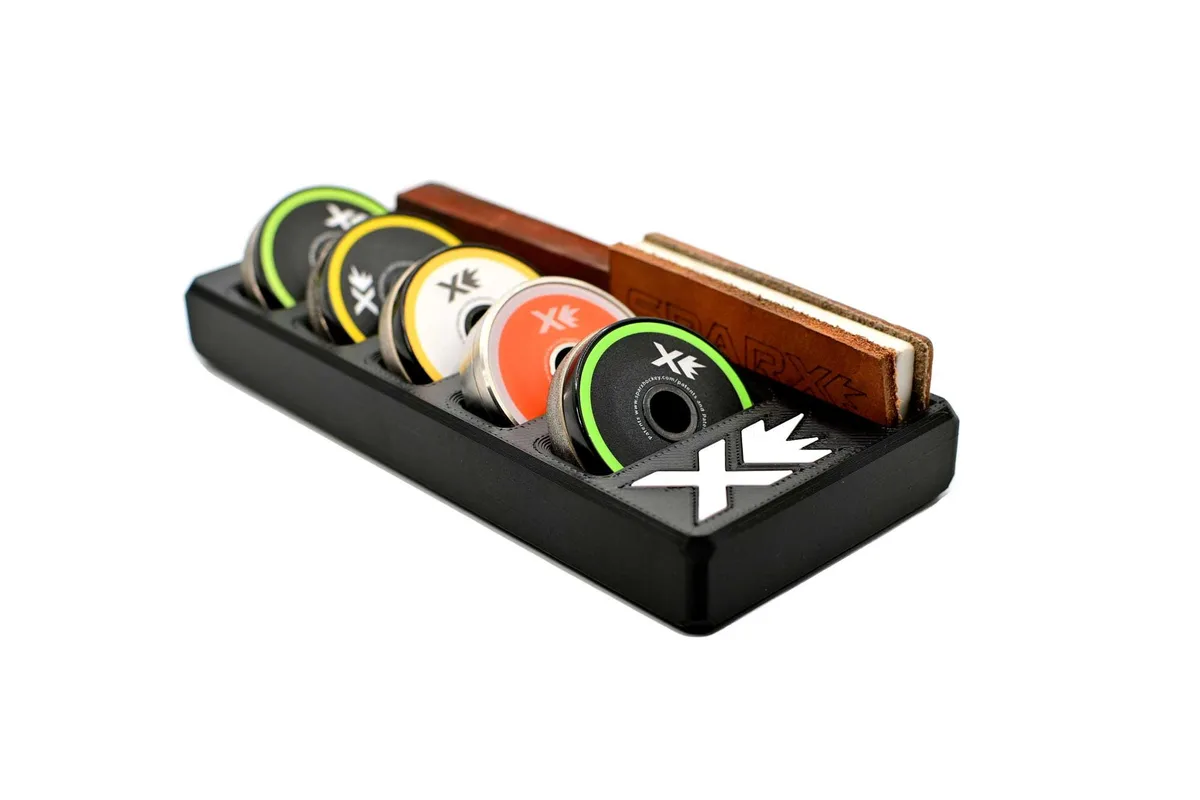 Accessories
Sparx Grinding Ring Organizer and Compact Skate Sharpener Accessory
4.9(11)$39.99 -
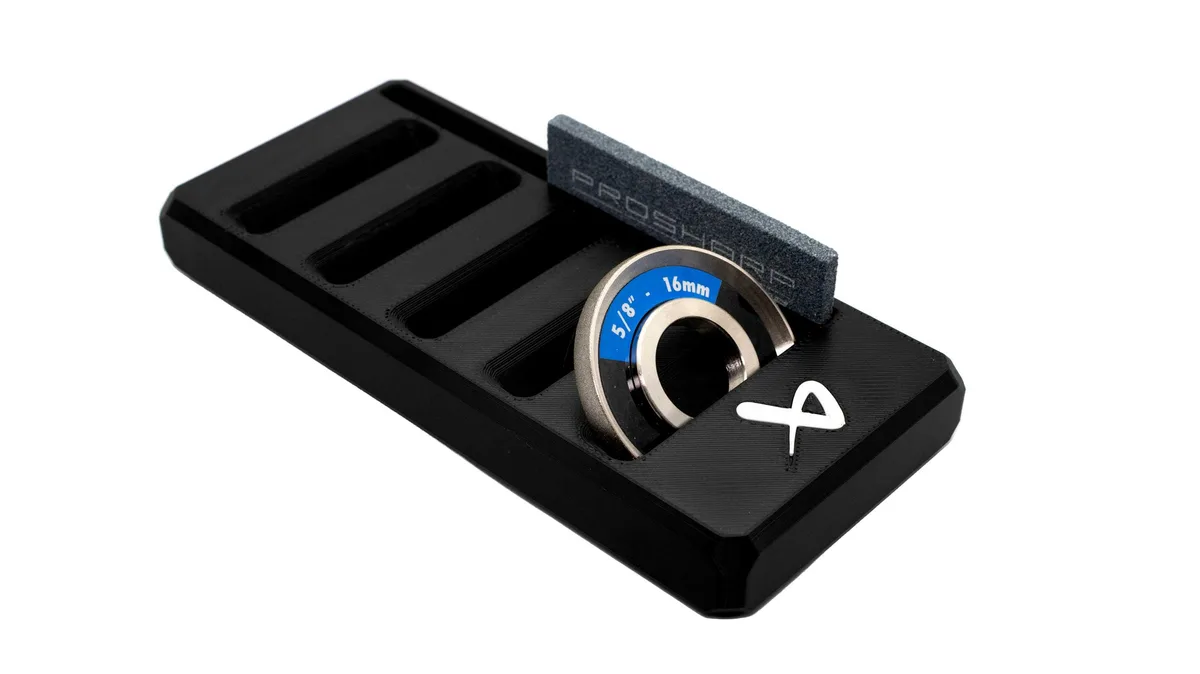 Accessories
Bauer Prosharp Grinding Wheel Organizer and Compact Skate Sharpener Accessory
5.0(2)$39.99 -
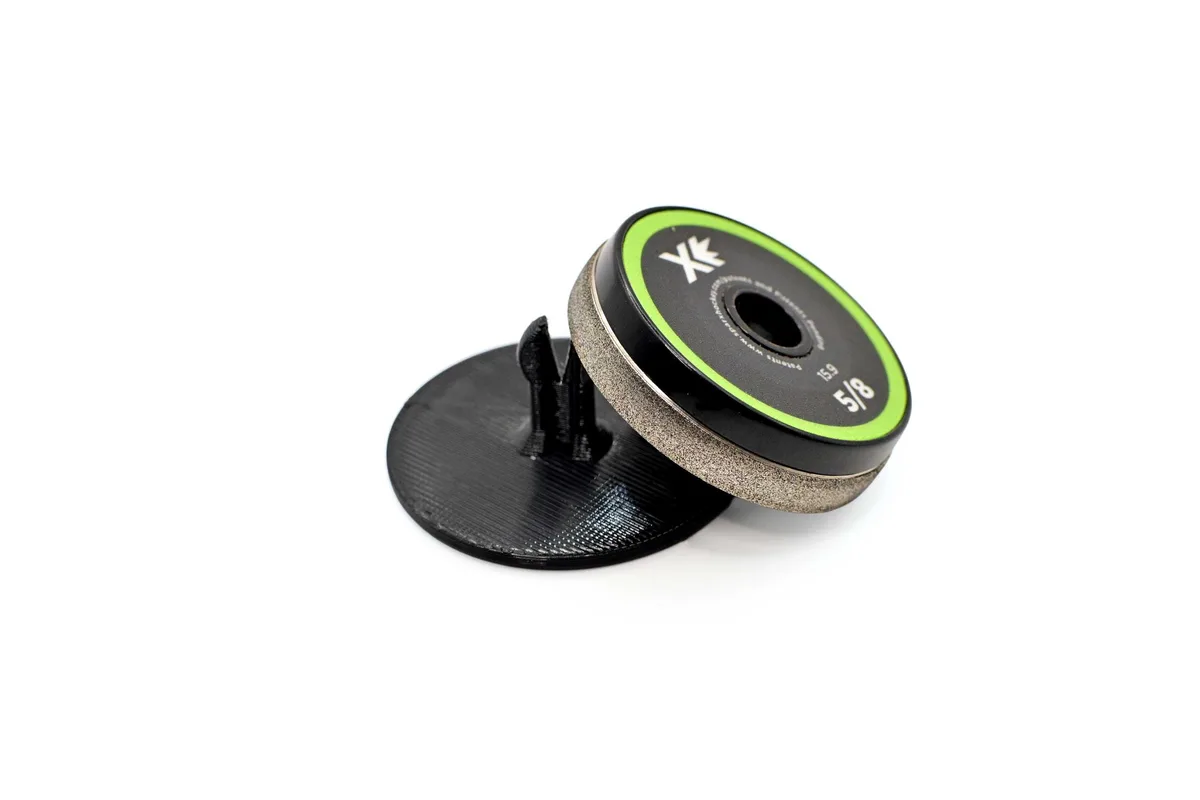 Accessories
SPARX Hockey Grinding Ring Islands in Matte Black: Precision Skate Sharpener Organization for Players
5.0(3)$24.99