Blog ·
Can Sparx Profile Skates? Sharpening vs. Profiling
Understand why Sparx sharpening does not create a custom blade profile and how to combine professional profiling with home maintenance.
No. Sparx’s consumer sharpener does not create or change a blade’s longitudinal profile. It is designed for sharpening the blade’s hollow and edges. If you want a different rocker or a custom profile, use a qualified profiling service. Sparx makes this limitation explicit in its official FAQ.
Two different shapes are involved
| Term | Where to look | What it describes |
|---|---|---|
| Hollow | Across the blade’s width | The groove between the skating edges |
| Profile or rocker | Along the blade from heel to toe | The lengthwise contour |
Sparx’s blade profile explanation distinguishes the two measurements: hollow is commonly discussed in fractions of an inch, while a hockey blade profile may be described using radii in feet.
This distinction prevents a common purchasing mistake. Buying another grinding ring changes the available sharpening hollow. It does not turn a home sharpener into a machine for creating an entirely different lengthwise contour.
Why a different hollow can still feel like a big change
Skaters may describe several experiences as “more bite,” “more stability,” or “better glide.” Those words do not uniquely identify the cause. Hollow, blade condition, profile, technique, and ice conditions can all be part of the conversation.
If you dislike the feel of your skates, describe the specific movement and circumstances to a technician. For example, explain whether the concern appears during stops, turns, acceleration, or transitions. That is more useful than assuming a new profile is the answer to every edge-related problem.
Can you maintain professionally profiled steel with Sparx?
You can use a compatible sharpening setup for routine maintenance after professional profiling. Keep a record of the profile and hollow so future work begins from known information. Ask the profiling technician how they recommend monitoring the steel and when it should be reassessed.
Sparx attributes profile preservation to its consistent sharpening operation, but that is a manufacturer claim, not a reason to stop inspecting worn or damaged steel. A home owner should not promise that every blade will retain its geometry indefinitely under every maintenance practice. See Sparx’s stated position.
A practical workflow
First, discuss the desired skating change with a profiling specialist. Have the profile work completed and documented. Establish the intended hollow, then use your home sharpener for the supported routine sharpening task. Keep notes if you later change the hollow so that you do not confuse that change with the earlier profiling work.
If an on-ice problem appears, check ordinary maintenance factors before asking for another profile: blade condition, edge level, finishing, and whether the cut matches the intended setting. A damaged edge can create an unpleasant session without requiring a geometry redesign.
Does FLAT or FIRE mean profiling?
No. FIRE describes a particular hollow geometry, and the FLAT ring is used for preparation or damage-removal work. Neither name means that the consumer sharpener creates a new longitudinal profile. The ring selection guide explains the options; the cross-grinding guide explains the preparation distinction.
If profiling is your main purchasing requirement, do not buy a consumer Sparx solely for that purpose. Choose a service or equipment explicitly designed for the profile work you need.
— You might like
Featured products from this guide
-
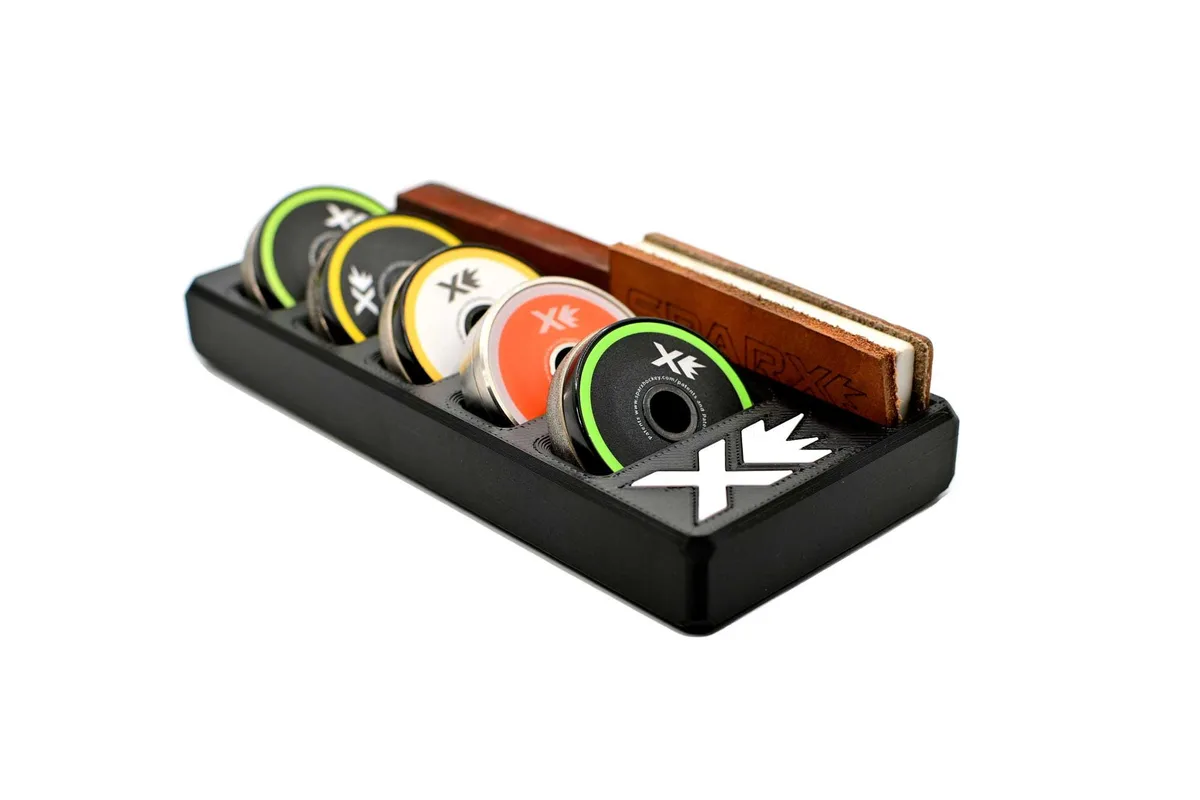 Accessories
Sparx Grinding Ring Organizer and Compact Skate Sharpener Accessory
4.9(11)$39.99 -
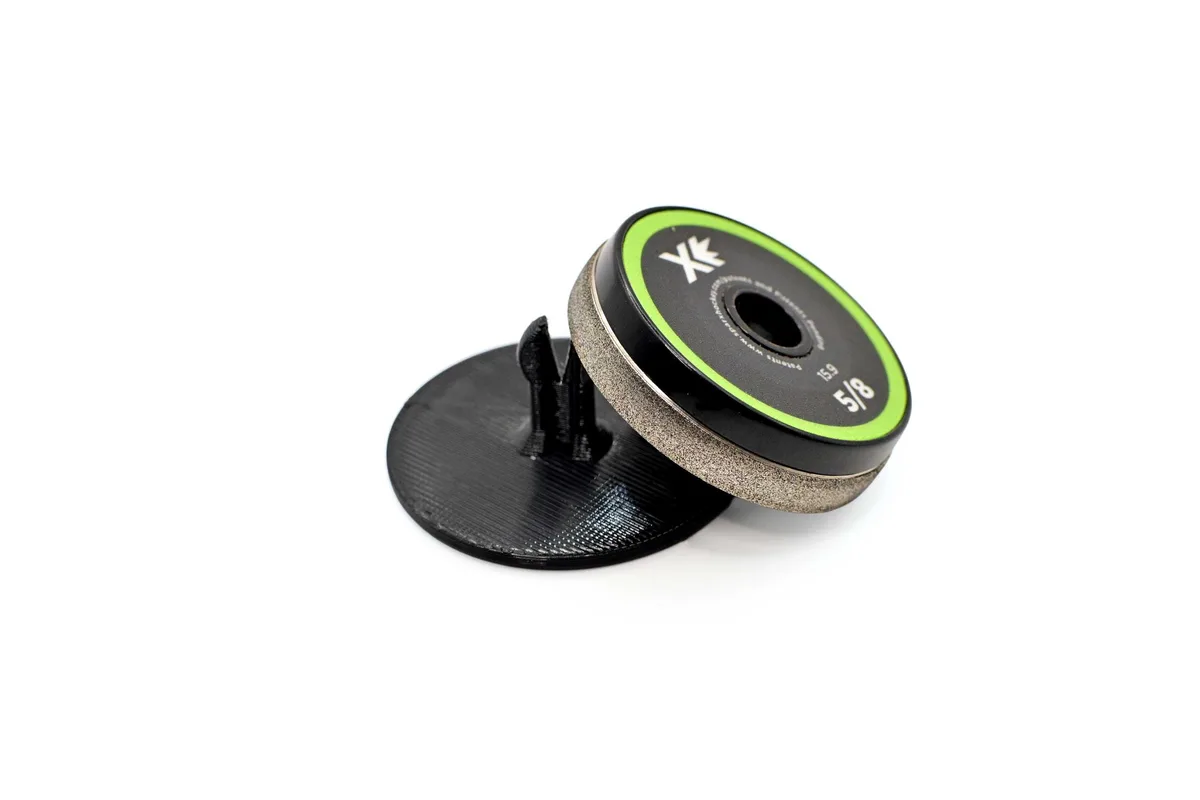 Accessories
SPARX Hockey Grinding Ring Islands in Matte Black: Precision Skate Sharpener Organization for Players
5.0(3)$24.99 -
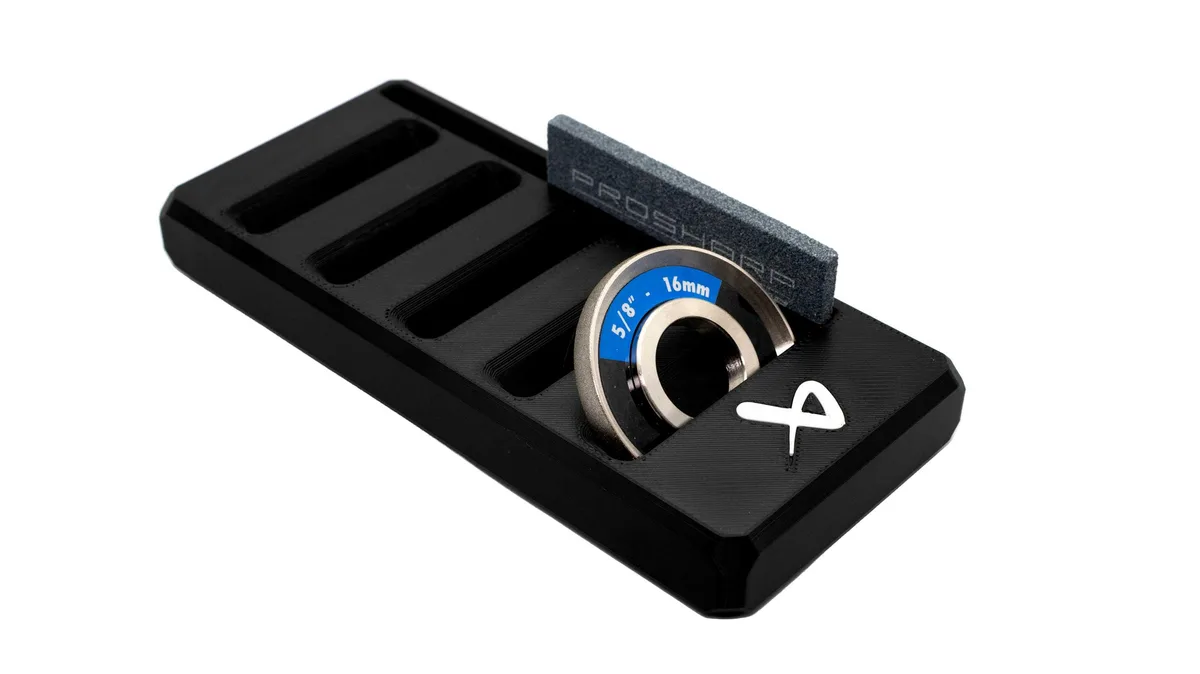 Accessories
Bauer Prosharp Grinding Wheel Organizer and Compact Skate Sharpener Accessory
5.0(2)$39.99