Blog ·
How to Calibrate a Sparx Skate Sharpener
Learn what Sparx calibration usually means, how it differs from blade height, and how to check your measuring tool before adjusting the machine.
For a Sparx owner, “calibration” usually means checking machine alignment or verifying the edge measuring device. Those are related but separate tasks. There is no useful universal instruction to “turn the calibration knob until the skates feel right.” First determine what is being measured and which component actually needs attention.
Separate the three setup questions
| Question | What it concerns |
|---|---|
| Is the grinding path centered? | Machine alignment |
| Is the ring meeting the blade correctly? | Contact height |
| Can I trust this reading? | Measurement tool condition, placement, and reference checks |
The Sharpener 3 has an optical alignment kit, and BEAM is a compatible measurement option. The product page and BEAM overview explain the equipment roles. Use the exact instructions supplied with your device and generation.
Verify the measurement before adjusting the machine
Clean the relevant blade and tool contact surfaces. Make sure the blade has been appropriately finished. Place the checker according to its instructions and repeat a reading at the same location.
If repeated placements give inconsistent results, changing the sharpener may only add another variable. Investigate tool seating, contamination, and blade condition first. A numerical display can be precise-looking while the physical setup is unreliable.
For a device supplied with a reference gauge, use that gauge and the current device instructions for verification or calibration. Do not substitute an arbitrary piece of steel and assume it is a valid reference. Follow the manufacturer’s prompts rather than inventing a universal target or button sequence.
Align using the proper workflow
For ES300 optical alignment, use the alignment ring and optical tool in Alignment mode, compare their indicators, and adjust only as required by the manual. Then restore the sharpening setup and verify a properly finished blade. See the official ES300 alignment procedure.
The alignment article explains the workflow in more detail. Keep a record of the direction and amount of any adjustment, especially if you are troubleshooting. Changing several settings without notes makes it difficult to return to the original state.
What if the skates still feel wrong?
First ask whether the issue is measurable unevenness, an incomplete finish, remaining damage, or a disliked hollow. These are different problems. A deeper or shallower hollow changes skating feel, but that is not a calibration of the machine.
Compare your current ring and blade record with the setup the player previously liked. If the equipment is new to the skater, assess it during practice and gather specific feedback rather than immediately making several adjustments.
When to ask Sparx for help
Contact support if a repeatable problem remains after the prescribed checks or if the machine shows abnormal behavior. Provide the generation, blade details, measuring device, exact readings or photographs, and the steps already completed.
A support request built around those observations is more actionable than “the calibration is off.” For height and hollow questions, read how to adjust Sparx and which ring to use.
— You might like
Featured products from this guide
-
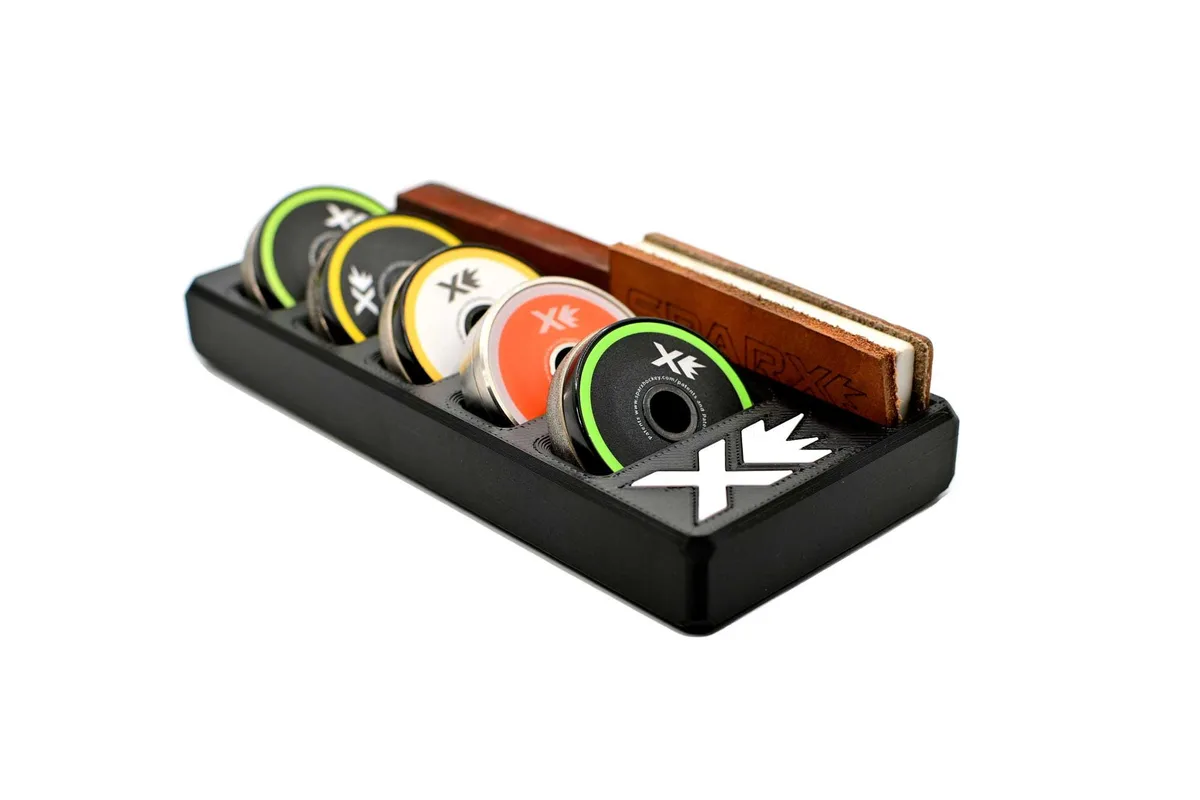 Accessories
Sparx Grinding Ring Organizer and Compact Skate Sharpener Accessory
4.9(11)$39.99 -
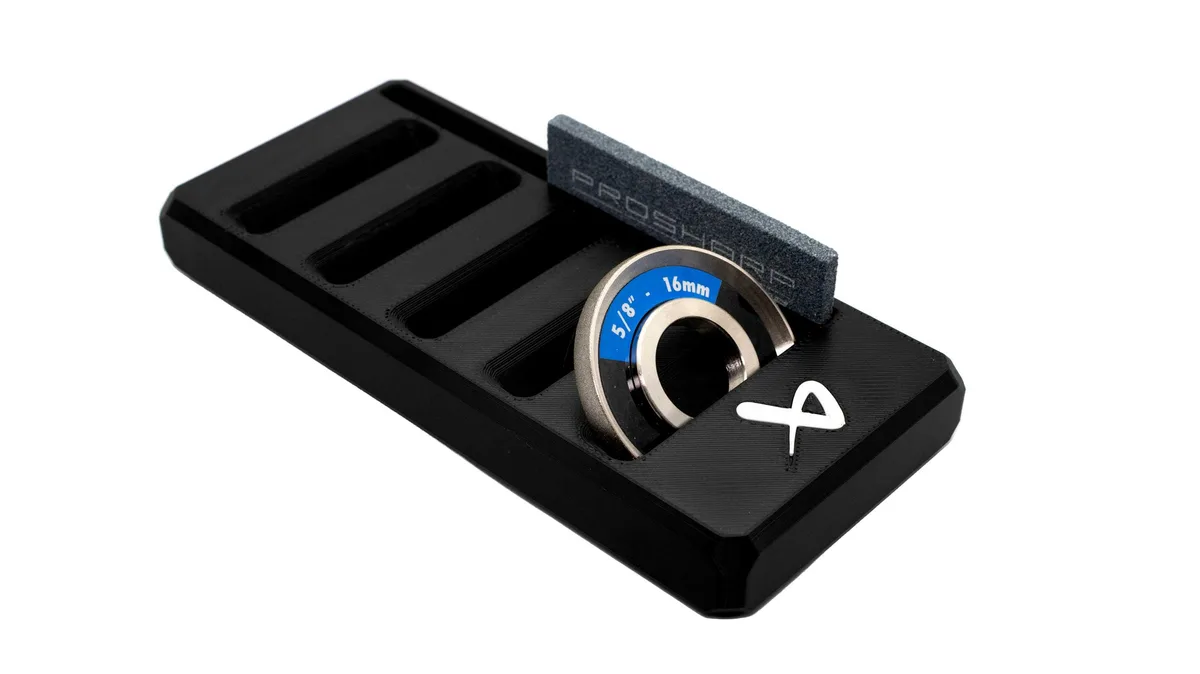 Accessories
Bauer Prosharp Grinding Wheel Organizer and Compact Skate Sharpener Accessory
5.0(2)$39.99 -
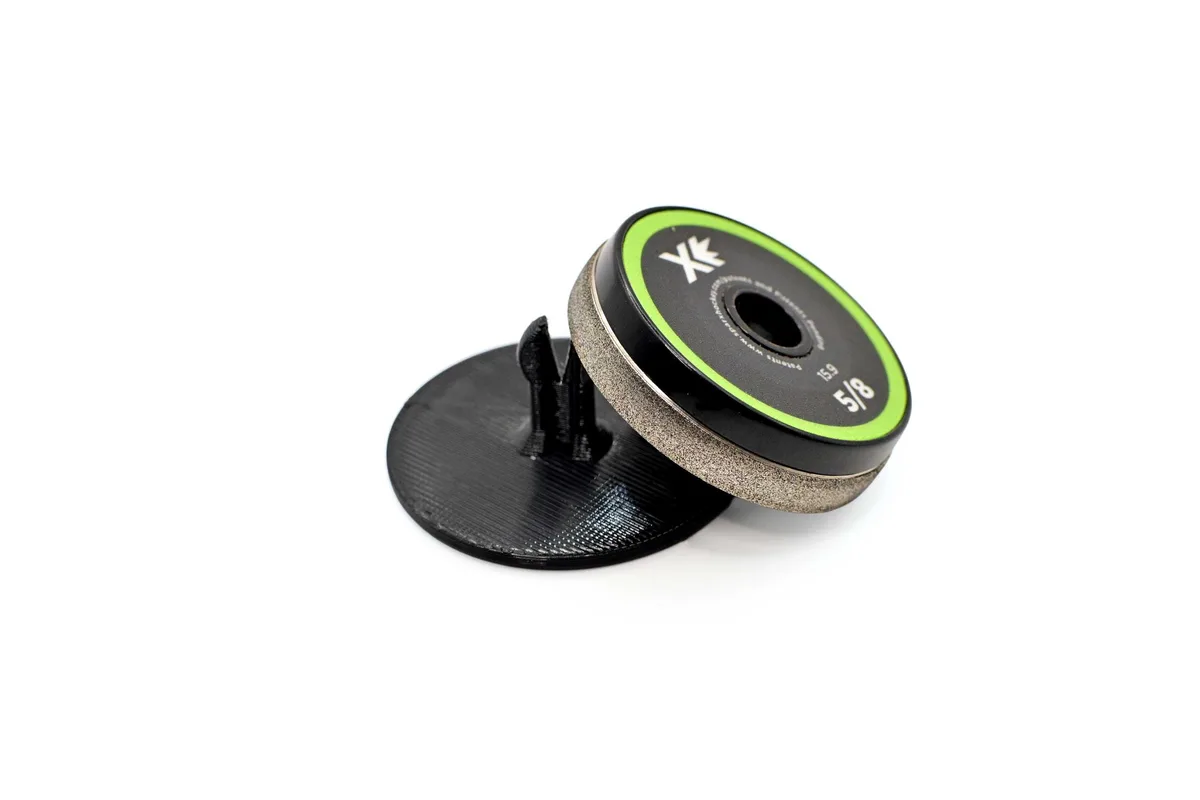 Accessories
SPARX Hockey Grinding Ring Islands in Matte Black: Precision Skate Sharpener Organization for Players
5.0(3)$24.99