Blog ·
Are Sprinter Vans Hard To Drive?
Find out how hard a Sprinter van is to drive, with practical advice for turning, parking, reversing, highway travel, and learning its dimensions.
A Sprinter is manageable for many drivers who are comfortable with larger vehicles, but its height, length, rear-wheel path, and loaded weight require more planning than a car. Parking and tight turns usually demand the most adjustment.
What feels familiar and what changes
The basic controls are familiar, and an elevated driving position can help you see traffic ahead. That does not remove blind spots beside the van or behind its rear doors. A camera is useful for checking an area, but its image is not a complete view of every obstacle.
The rear wheels follow a tighter path than the front wheels during a turn. Meanwhile, the body behind the rear axle can swing outward. These two movements explain why a turn that clears the front bumper can still clip a curb, post, or parked vehicle.
Practice before the first long trip
- Set the seat and both mirror sections before moving.
- Learn the van’s actual overall height, including roof equipment.
- Practice slow turns in an open area using cones or clearly visible markers.
- Reverse into a large space and stop whenever an obstacle disappears from view.
- Take a short drive on familiar roads before attempting crowded streets.
Choose the smallest body that meets your passenger or cargo needs. Extra length provides useful space but increases the room required to turn, reverse, and park.
Driving a loaded van
Leave more room to slow down, reduce speed before bends, and secure cargo so it cannot shift. Stay within the vehicle and axle ratings. A heavily loaded van can respond differently from the empty rental you practiced in.
Wind also matters. Exposed bridges and passing trucks can produce noticeable movement. Slow down smoothly when conditions warrant it; do not assume driver assistance can overcome excessive speed or poor loading. NHTSA’s passenger-van guidance emphasizes experienced drivers, appropriate tire pressure, seat belts, and careful loading.
A useful first-drive rule
If you cannot confirm clearance or see your reversing path, stop and look. A quick walk around the van is easier than repairing bodywork. For a rental, ask the branch to demonstrate controls and explain height restrictions before you leave.
What usually feels hardest on the first drive
The adjustment is usually judging space rather than learning the controls. Spend the first practice session on right turns, rear-body swing, and reversing. If your usual route includes a garage or narrow driveway, verify it before collecting the van rather than making it the first test of your new driving skills.
Related reading
— You might like
Featured products from this guide
-
 New Accessories
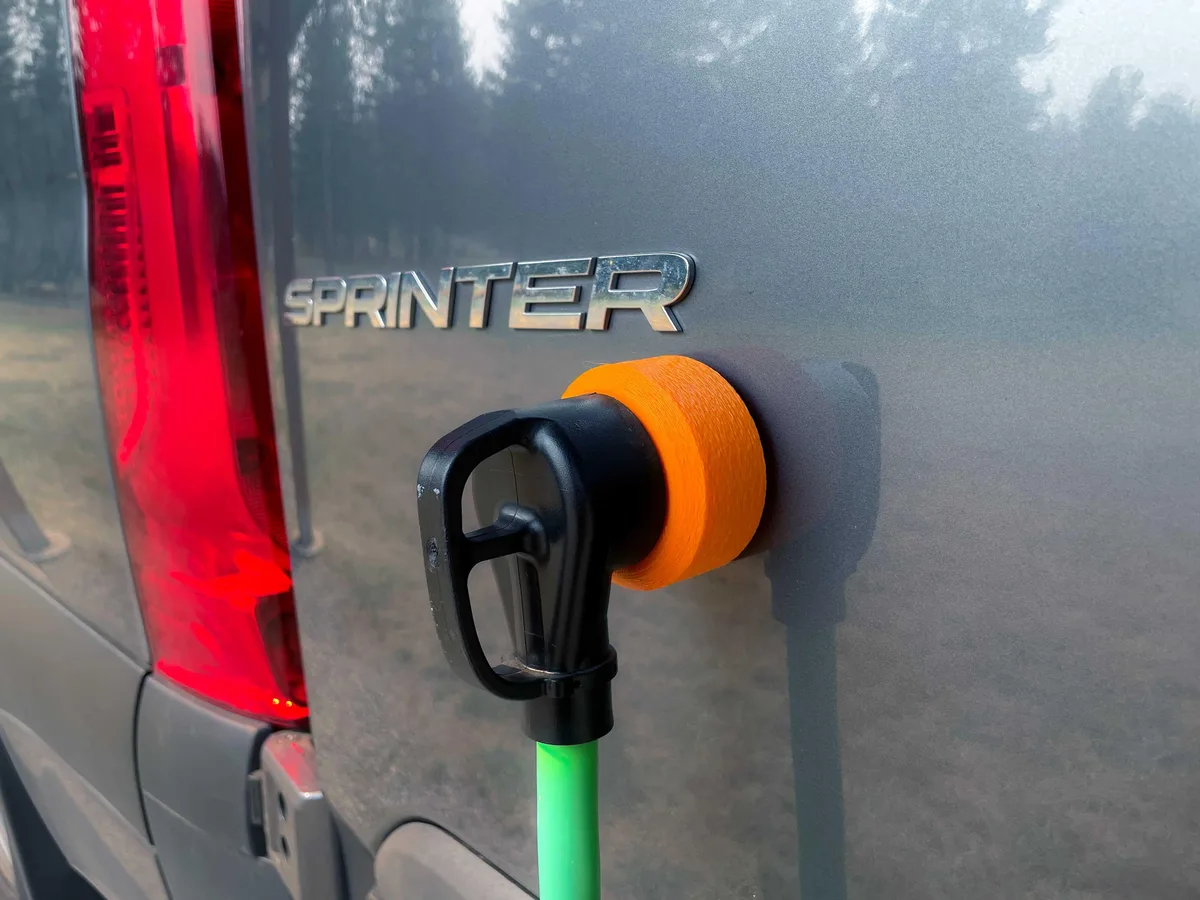
RV Plug Universal Wall Mount – Holder & Adapter Storage for 50A, 30A, 15A Plugs
from$24.99 -
 Phone Mounts
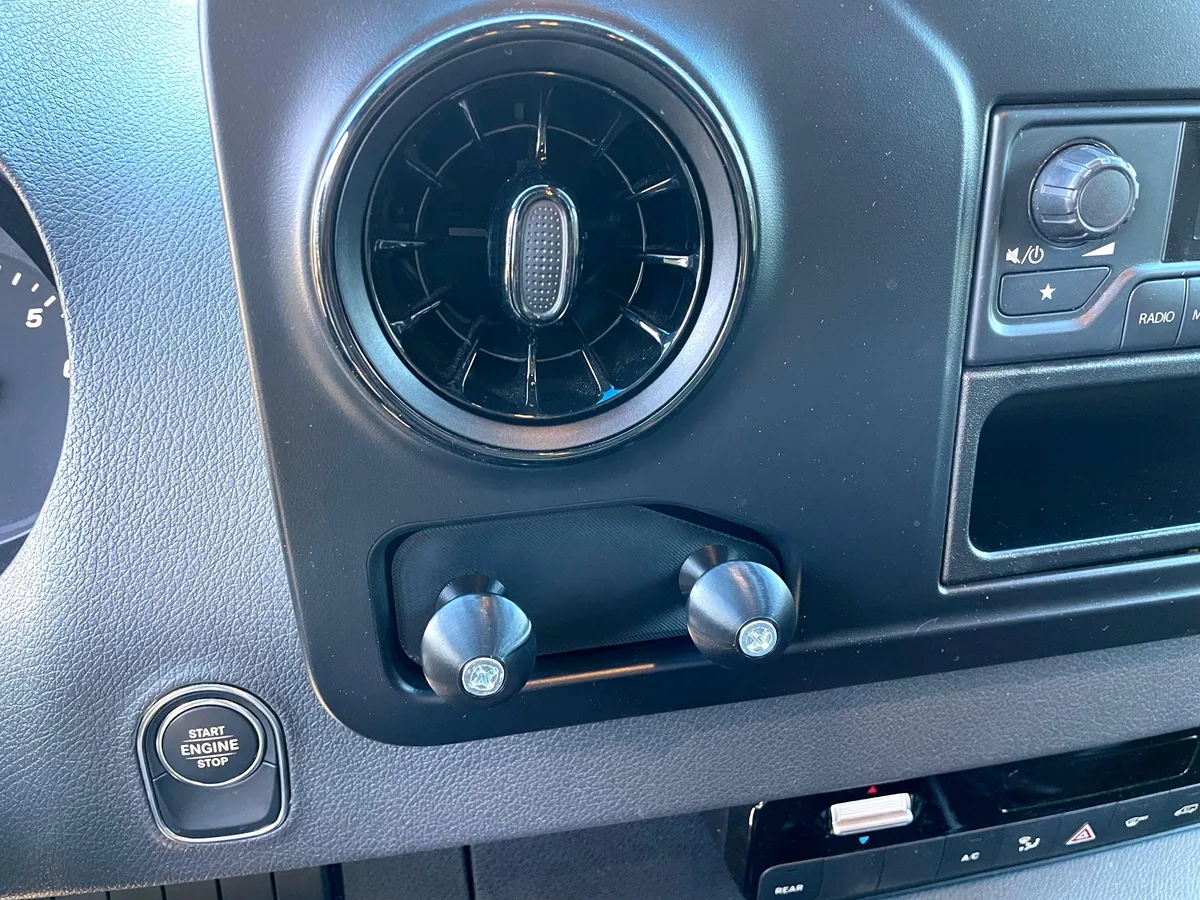
Mercedes Sprinter Dash Cubby RAM Ball Mount Adapter for Phone Holders and Van Accessories
5.0(14)from$34.99 -
 Emblems & Badges
Mercedes Sprinter Front Star Emblem Upgrade | Custom Hood Ornament for 2019+ Vans | Camper Accessory
4.9(18)from$39.99